


Criminal Case: Save the World!
4.76.28K Reviews
App Specs
- Version
- 2.45.1
- Updated On
- License
- Free
- Downloads
- 10,000,000+
- Developer
- Pretty Simple
- Categories
- Adventure
- Platform
- Android
Screenshots

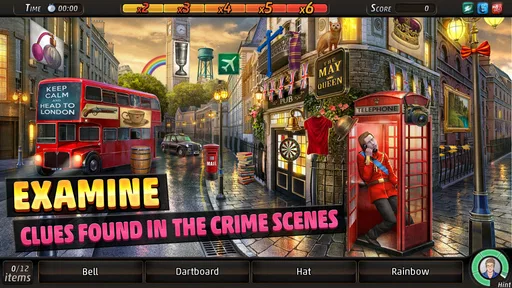



 Analysis by AppCompare
I approached Criminal Case: Save the World! as a game for short bursts rather than as a traditional adventure that demands a long uninterrupted session. Its central appeal is straightforward: investigate murder cases, inspect scenes, collect clues, and work toward a solution while moving through stories set in different parts of the world. That makes it easy to understand within minutes, but the real question is whether its repeated investigation loop remains enjoyable after the novelty fades.
In my experience, the answer depends heavily on what I want from a mobile game. If I like spotting details, following a light mystery, and returning to the same case over several small sessions, this adventure game has a comfortable rhythm. If I want fast action, deep character control, or a completely uninterrupted story, I would look elsewhere. The free entry point is inviting, but the design also asks me to manage waiting, energy, and progress carefully.
What to consider before choosing it
The first decision is about pace. This is not a game I would install expecting a console-style detective simulation. The investigation is presented through accessible scenes and repeatable tasks, so the satisfaction comes from noticing objects, completing evidence-related steps, and gradually opening the next part of a case. It is closer to a casual hidden-object mystery with adventure framing than to a complex deduction game where every conclusion comes from reasoning alone.
That distinction matters. I can play it while commuting, during a break, or at the end of the day when I want something more engaging than scrolling but less demanding than a long role-playing session. A typical session might involve examining a crime scene, replaying a location to earn more resources, and then returning later when the next part of the investigation is available. The structure suits a phone very well because progress can be divided into small pieces.
The game comes from Pretty Simple and sits in the adventure category. It is free to start, with optional purchases ranging from $0.99 to $99.99 per item. I would keep that in mind before handing the phone to a younger player or treating the game as a completely cost-free experience. The content rating is Teen, which fits the murder-investigation theme even though the presentation is stylized rather than built around graphic realism.
For a quick sense of its reach, the game has passed 10 million installs and holds a 4.7 average from about 167 thousand ratings. Those figures suggest that the basic format has found a large audience, but popularity does not remove the need to check whether the energy-based rhythm and repeated scene visits suit my habits.
The investigation loop is simple, but planning improves it
Most of the enjoyment comes from learning how to approach each scene efficiently. At first, I naturally scan randomly, tapping anything that looks relevant. That works, but it can become slow and wasteful when a scene contains many small objects. I get better results by dividing the screen into sections, checking one area at a time, and remembering the visual shape of objects instead of searching only for their names.
Worth Reading Before You Choose

EA SPORTS FC Mobile 26 Is a Bigger Football Game, but It Takes Time

Flipboard Shows What News Apps Must Do Beyond the Feed

Switching to Android Auto Means Rethinking Your Driving Routine

Google Calendar Makes a Crowded Week Easier to Manage

Ludo King Makes the Most of the Minutes Between Plans

Baby Panda World Brings Quick Play to Modern Phones, but Its Game Library Feels Busy
That small change is more important than it sounds. The game rewards attention, yet it also encourages repeated visits to familiar locations. Once I stop treating every scene as a frantic hunt and start using a consistent search route, the process feels less tiring. I can also use early visits to learn the layout, which makes later objectives faster when the same location returns with a different list of items.
Another useful habit is to avoid spending every available resource immediately. When a case offers several possible actions, I prefer to finish the investigation step that moves the story forward before using resources on optional improvements. This does not make the game magically generous, but it reduces the feeling that I am constantly running out of something because I acted without a plan.
The cases work best when I treat them as a sequence of small questions: what happened here, which clue connects to the next person, and which location deserves another look? The game does not replace a notebook or a serious deduction board, but remembering names, places, and visual details can make the story feel more involving. I find that especially useful when I return after a day away and need to reconstruct what I was investigating.
Why the global setting helps the format
The worldwide case structure gives the game more variety than a single-location detective series would have. Moving between cases and settings helps prevent every investigation from feeling like the same room with different objects. I would not describe the storytelling as the main reason to play, but the changing backdrop gives me a reason to continue beyond simply clearing another scene.
That variety also makes the game easier to play in different moods. I can focus on the visual search when I do not want to read much, or pay closer attention to the case thread when I am in the mood for a light mystery. The flexible balance is one of its strongest qualities. It does not insist that every session be played with the same level of concentration.
Still, the story is designed to support the puzzle loop, not replace it. Players who want carefully layered clues, demanding interrogations, or multiple logical routes to a conclusion may find the investigations too guided. I often know that the next task is mainly about completing the required activity rather than independently proving a theory. That is not a flaw for casual play, but it is an important limit for anyone seeking a serious detective experience.
Where it wins against other mobile adventure choices
Compared with action-heavy adventure games, this one is much easier to pick up and put down. I do not need quick reflexes, a long tutorial, or a large block of free time. The core interaction is understandable almost immediately, which makes it a good choice for someone who enjoys mysteries but does not usually play games on a phone.
It also has an advantage over purely narrative mystery apps when I want something to do with my hands. Reading a branching story can be relaxing, but here I am actively searching scenes and making progress through tasks. The combination gives the experience a more game-like feel without demanding the complicated controls found in many larger adventure titles.
Its strongest practical advantage is the repeatable nature of the locations. A failed search does not always mean the whole case is lost; I can return, improve my recognition of the scene, and try again with a better method. That makes the game forgiving for casual players. I do not have to be naturally good at puzzles to make progress, although patience becomes increasingly important.
The large player base and strong average rating also make it easier to see why the format works for many people. I would not use those figures as proof that every player will enjoy it, but they match my impression that the game is polished around a clear, familiar loop. Pretty Simple has focused on making the investigation approachable rather than obscure.
Where a different category may fit better
I would choose a conventional puzzle game instead if my priority were pure problem-solving with little story or resource management. In this game, searching scenes and advancing cases are tied to a broader progression system. Someone who wants a fresh logic challenge every few minutes may become frustrated when the same locations or activities return.
I would also choose a premium, story-led adventure if I wanted to play from beginning to end without interruptions connected to mobile progression. A paid narrative game may offer a more concentrated experience, while this title is built for repeated visits. The trade-off is convenience: the free model makes starting easy, but the session flow can feel less direct.
Players looking for action should skip it entirely. There is no reason to install a hidden-object investigation game expecting combat, exploration in the usual console sense, or character development on the scale of a role-playing game. Its appeal is observation and case progression, not physical challenge.
It may also be a poor match for anyone who dislikes optional purchases on principle. The game can be started without paying, but the presence of individual items priced from $0.99 up to $99.99 means I would review the purchase settings before playing regularly. I especially recommend that step for families, because a free download can still lead to paid decisions during play.
Everyday use: a realistic way to play
Imagine I have fifteen minutes before an appointment. I can open a case, search a scene, and stop without needing to remember a complicated control scheme. Later, I can return and continue the same investigation. That is where the game feels most natural to me: as a reliable pocket activity that gives a small sense of completion without demanding a full evening.
On a longer weekend session, the weaknesses become clearer. Replaying scenes can feel repetitive, and progress may slow when I have used the resources available for the moment. I would not try to force a marathon session. Instead, I would rotate it with another game or leave it until I actually feel like solving another small case.
One of my more useful routines is to stop after completing a meaningful story step rather than continuing until the game becomes tedious. Ending at a natural point makes the next visit feel like a continuation instead of a chore. It also prevents me from spending resources impulsively just to keep a session alive.
The real cost of changing to another game
Switching away is easy if I am bored with the investigation loop, because the game does not require me to master a complex control system. The harder part is giving up accumulated case progress and the familiarity I have built with its scene layouts. If I have spent time learning how the locations work, another casual mystery game may feel slower at first simply because I have to learn its visual language from the beginning.
There is also a difference in habit. This title encourages me to return repeatedly, while a self-contained adventure may encourage one longer, more deliberate playthrough. Neither approach is automatically better. I would switch when the repeated searches stop feeling like investigation and start feeling like routine maintenance. I would stay when short sessions still give me a satisfying feeling of finding something I had missed.
Before switching, I would test one practical change: play more selectively. Rather than opening the game every time energy or progress is available, I would use it only when I genuinely want a light mystery. That often reveals whether the problem is the game itself or simply playing it too frequently. If the scenes remain enjoyable with more space between sessions, it is probably worth keeping alongside a different genre.
Version, access, and who should install it
The current version is 2.45.1, and the game supports devices running Android 7.0 or later. That makes it accessible to many older Android phones, although the experience will still depend on how comfortably the device handles the game and displays small objects. A larger screen can make searching less tiring, especially for players who find tiny visual details difficult to distinguish.
I recommend it to adults and teenagers who enjoy casual crime stories, visual searches, and progress that can be divided into short sessions. It is particularly suitable for someone who wants an adventure game without reflex pressure. It is less suitable for children because of the Teen content rating, and I would not recommend it to anyone who wants a completely purchase-free or uninterrupted experience.
For new players, my advice is to begin slowly, learn the shape of each scene, and resist treating every available action as urgent. Search methodically, save resources for story progress, and take breaks when repetition starts to show. Those habits do more to improve the experience than rushing through the early cases.
My recommendation
I recommend Criminal Case: Save the World! when the right description is “a casual mystery game I can revisit,” not “a deep detective adventure.” Its approachable scenes, worldwide case framing, and flexible session length make it a strong fit for phones and for players who like observation more than action.
My reservation is the same reason some people will enjoy it less: the loop is deliberately repetitive and shaped around mobile progression. I would choose another game for uninterrupted storytelling, demanding deduction, or a premium experience without optional purchases. But for a free-to-start adventure that turns small breaks into light investigations, it earns a place on my phone.
The best way to enjoy it is to play in measured sessions, search with a consistent method, and treat the optional spending as a boundary to manage rather than a requirement. With that expectation, Pretty Simple’s game delivers an easygoing case-solving routine that is more satisfying than its simple premise first suggests.
Pros
- Engaging hidden-object investigations with a clear crime-solving structure.
- Colorful locations and character designs make each case visually enjoyable.
- Regular case progression provides a steady stream of objectives and rewards.
- Simple controls work well on both phones and larger tablet screens.
- Social features can add friendly competition and shared progress goals.
Cons
- Energy limits can interrupt investigations when you want to keep playing.
- Some clues and upgrades may require patience or premium currency.
- Repeated search scenes can feel familiar after extended play sessions.
- The storyline is lighter than the darker theme may initially suggest.
- An internet connection may be needed for certain features and progress syncing.
FAQs for Criminal Case: Save the World!
What is Criminal Case: Save the World!?
Criminal Case: Save the World! is a hidden-object adventure game in which you investigate crimes, examine evidence, question suspects, and solve cases around the globe. It combines crime-scene searches with puzzle challenges, dialogue, and story-driven investigations. The game is designed for casual play, with each case divided into smaller tasks that can be completed in short sessions.
How does the gameplay work?
The main activity is searching illustrated crime scenes for specific objects within a time limit. Finding items earns points and helps you collect clues, while additional mini-games may involve analyzing evidence or completing investigative tasks. You also interact with characters and make progress through a series of connected cases. Accuracy and speed are important because they affect your score and rewards.
Is Criminal Case: Save the World! free to download and play?
The game is generally free to download, but it includes optional in-app purchases. Players can often progress without paying, although energy systems, waiting periods, boosters, and other limitations may encourage purchases during longer play sessions. If children use the device, it is worth checking parental controls and purchase settings before playing, especially because optional items can be bought through the app store.
Does the game require an internet connection?
An internet connection may be needed for several features, including downloading game content, synchronizing progress, displaying advertisements, processing purchases, and accessing social or online elements. Some previously loaded scenes may work temporarily offline, but the experience is not guaranteed to be fully playable without connectivity. For the most reliable performance, launch the game while connected to Wi-Fi or mobile data.
Is Criminal Case: Save the World! suitable for children?
The game has a cartoon-style presentation, but its subject matter focuses on murders, investigations, crime scenes, suspects, and forensic evidence. It is less graphic than a realistic crime game, yet some children may still find the themes or storylines unsettling. Parents should review the store rating, consider the child’s age and sensitivity, and monitor advertising, social features, and optional in-app purchases.


